Late one night, long after everyone had gone home, Jason Kan found himself alone in the office, staring at a blank wall and asking a simple yet heavy question: What am I doing here? What is my motivation?
He'd climbed the ranks over more than a decade in the international internship space, starting in a junior role and eventually becoming COO of a fast-growing, VC-backed company. He'd built multiple functions from scratch — HR, talent acquisition, partnerships, CRM, IT. As the company grew from a few dozen people to well over a hundred, Jason's scope and title grew with it.
But somewhere along the way, he had lost perspective.
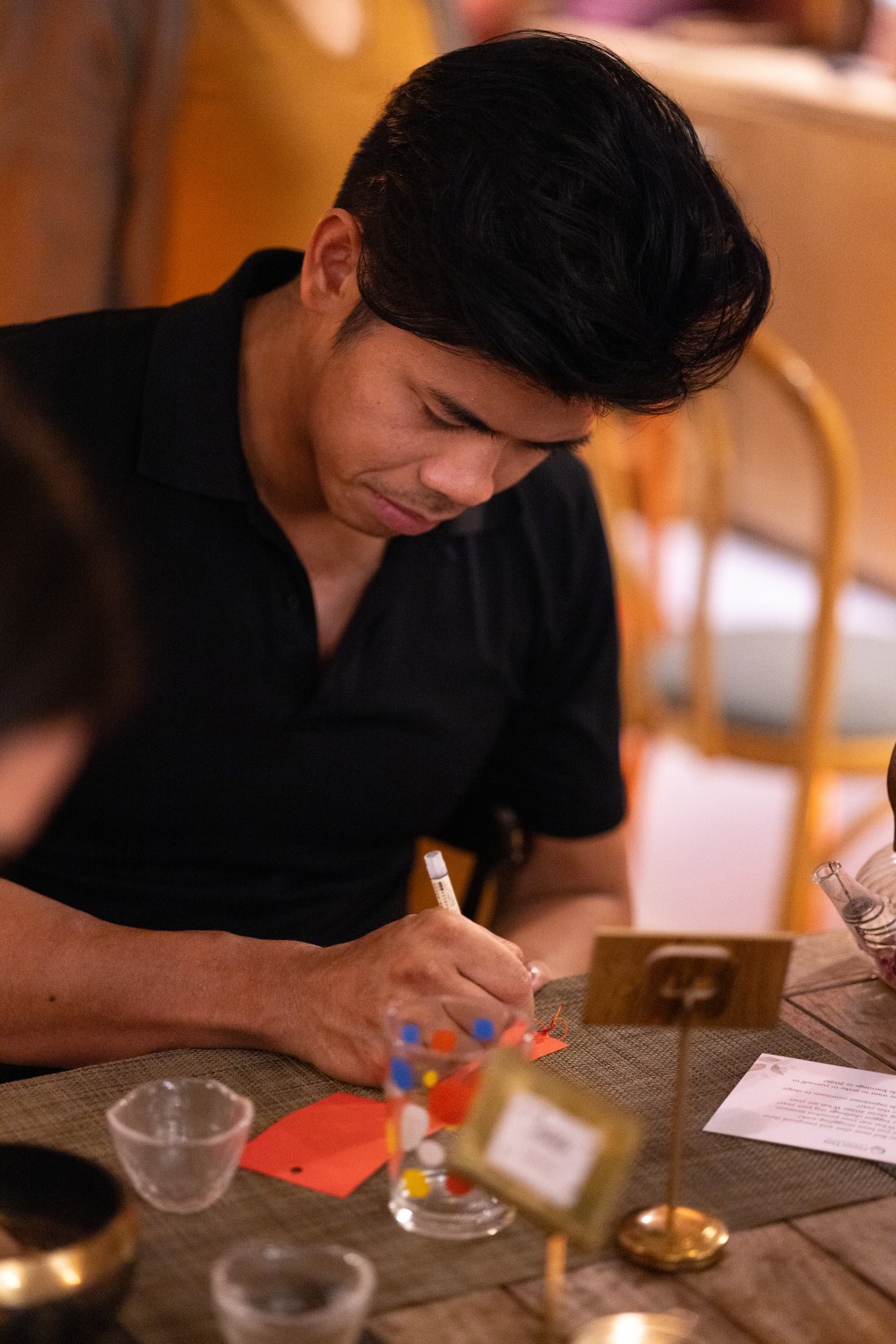
Jason 1.0 to Jason 2.0
Looking back, Jason realized there had really been different versions of himself as a leader.
Jason 1.0 was the hands-on builder. At around 30–40 employees, he was both manager and individual contributor for multiple functions, learning to build various functions and processes from scratch. This phase gave him sharp operator skills.
Jason 2.0 emerged as the company scaled to ~125 people, with managers reporting into him and whole functions depending on his leadership. As the business went through a transition from services to tech platform around 2023–2024, complexity and pressure spiked.
Jason turned to the usual leadership advice: be stoic, don't show vulnerability, stay focused on results. In one-on-one meetings, he defaulted to tactics and solutions.
"What I was advising was very tactical… 'Think about doing this, this, this.' But it wasn't resonating. I didn't acknowledge my team members just wanted to be heard."
On the surface, it looked like strong leadership. Underneath, something else was happening.
His direct reports were under immense pressure. Many of them weren't looking for another checklist from their COO; they wanted to feel understood.
At the same time, he felt his own frustration building with the company's direction, not the strategy itself, but something deeper:
"The real frustration was I thought I wasn't being heard and seen for what I think my skills are as an operator."
That night in the office crystallized the deeper issue.
"For the last five years, I have been obsessed with work. That's been my one and only thing. I lost perspective. And I think that moment in the room, staring at the wall, was a reflection of that."
It wasn't just about a hard phase at work; it was about realizing he had allowed his identity and self-worth to narrow down to a single dimension: his job.
He knew something needed to change. He just didn't yet know how.
The Turn: Circle
A few months later, Tara joined as a fractional operator during a critical period — the company was migrating to a new platform and needed alignment across Tech, Operations, and Sales. Watching her work was the first hint that leadership could look and feel different. She was as sharp operationally as anyone Jason had worked with, but she led with a level of emotional attunement he wasn't used to seeing — slowing down to ask how people were really doing, while moving forward cross-functional projects that had been stuck and strengthening trust between silo teams. This platform migration that had been stalled for over 18 months was successfully shipped in 4 months.
"Watching her and observing her… that was my first indication of, right, there is another way to lead here."
By the time Jason came to Circle, he was ready to question some of the assumptions that had carried him this far.
Over three days, he describes the experience as peeling back layers of an onion. At first, they explored the surface of his leadership: how he made decisions, how he related to his team, the playbooks he had absorbed. Then the inquiry kept going — down into what actually motivates him, what he values, and where he had been out of alignment with himself.
"Over the course of the three days, it was like peeling an onion… understanding myself, really understanding myself. When we got to the very end, we got to the core… what matters to me the most right now is making sure that I can help my mum while she's still in the world. I realized these moments are precious."
He came to see that two things had quietly been driving him all along: a deep hunger for growth and learning, and a genuine love to help his people become who they could be. And beyond work, something even more fundamental surfaced: how much his mum and his family mattered to him, and how little space they'd had in the way he'd been living.
For years he'd been obsessed with work and had lost perspective on life. Circle helped him get that perspective back.
"Yes, Circle makes you a better leader, but for me, it made me a better person. It made me a fuller person."

Jason 3.0: A More Human Leader
The shift since then hasn't been about a dramatic external reinvention so much as a steady internal one. Jason is still COO of the same company. The complexity, if anything, has increased. But he is moving through it differently.
He has redesigned how his team spends time together. Weekly standups now open not with status updates, but with check-ins on how people are feeling and what is going on for people.
"We all know the very first question we have to share is how we feel… we share roses, thorns, buds, both professionally and personally. For me, that meeting is really about getting everyone to feel more connected… and getting a temperature gauge of headspace."
This check-in system has helped him spot brewing issues before they escalate, allowing him to address problems when they're still manageable rather than in crisis mode — for example, preventing regrettable attrition.
When there is tension between teams — say, between marketing and product — he doesn't just push for clearer handoffs. He brings leaders together to explore their "trust languages": what each person needs in order to feel trust (competence, commitment, reliability, etc.).
"We put the leaders in a room… we identified each other's trust languages. We realized the conflict wasn't about tactics, it was about one leader optimizing for competence and another for commitment. That was a big unlock."
The shift in understanding transformed how these teams worked together — what had felt like constant friction became a foundation for more productive collaboration.
He has also brought these practices into the leadership team. Exec and VP meetings now begin with an honest round about how everyone is doing, personally and professionally. Not everyone is immediately comfortable with it, but Jason and his peers see it as part of building a more human culture at the very top.
Perhaps the most personal test of his growth came just days after Circle, when he sat down with his CEO. Instead of approaching the conversation purely through the lens of strategy or metrics, he allowed himself to talk about how he was actually feeling: the fatigue, the accumulated strain, the sense of not being fully seen. The CEO's response was empathetic and grounded, and their relationship deepened. Jason walked away feeling more authentic and more connected than he had in years.
His approach to the hardest managerial moments has changed too. Letting someone go is still difficult, but his entire approach has transformed. Where he once would avoid or delay these conversations — and when forced to have them, deliver them quickly and impersonally ("letting you go today or next week") — he now faces them head-on with both courage and compassion. He thinks of it as a transition he can actively support: giving people two to three months, helping them find their next role, and framing it genuinely as a win-win because the deeper connection he's built makes the care behind the decision believable. In the eight months since Circle, he's had four of these conversations — each one difficult, but no longer dreaded or postponed.
Jason talks about himself now as "Version 3.0" — a leader who is still operationally rigorous, but far more anchored in humanity. He listens more than he speaks. He places as much importance on whether people feel heard and seen as on whether a project ships on time. And he is working toward an even fuller integration: no longer toggling between "professional Jason" and "personal Jason," but allowing himself to be one coherent person in all settings.
"I feel more enlightened… I feel more authentic in terms of myself as a leader. I'm trying my best to not think there are two Jasons — professional Jason and personal Jason."
The external facts of his life may look similar to someone scanning his LinkedIn. But the inner experience is very different from that night in the office, staring at the wall and wondering what he was doing with his life. Now, he is living and leading with a clearer sense of what and who it's all really for.
Written by Phuong Do, Program Manager at Green Tara Leadership